
Home > Featured-Content > For-LSPs > Industry-Data-and-Resources
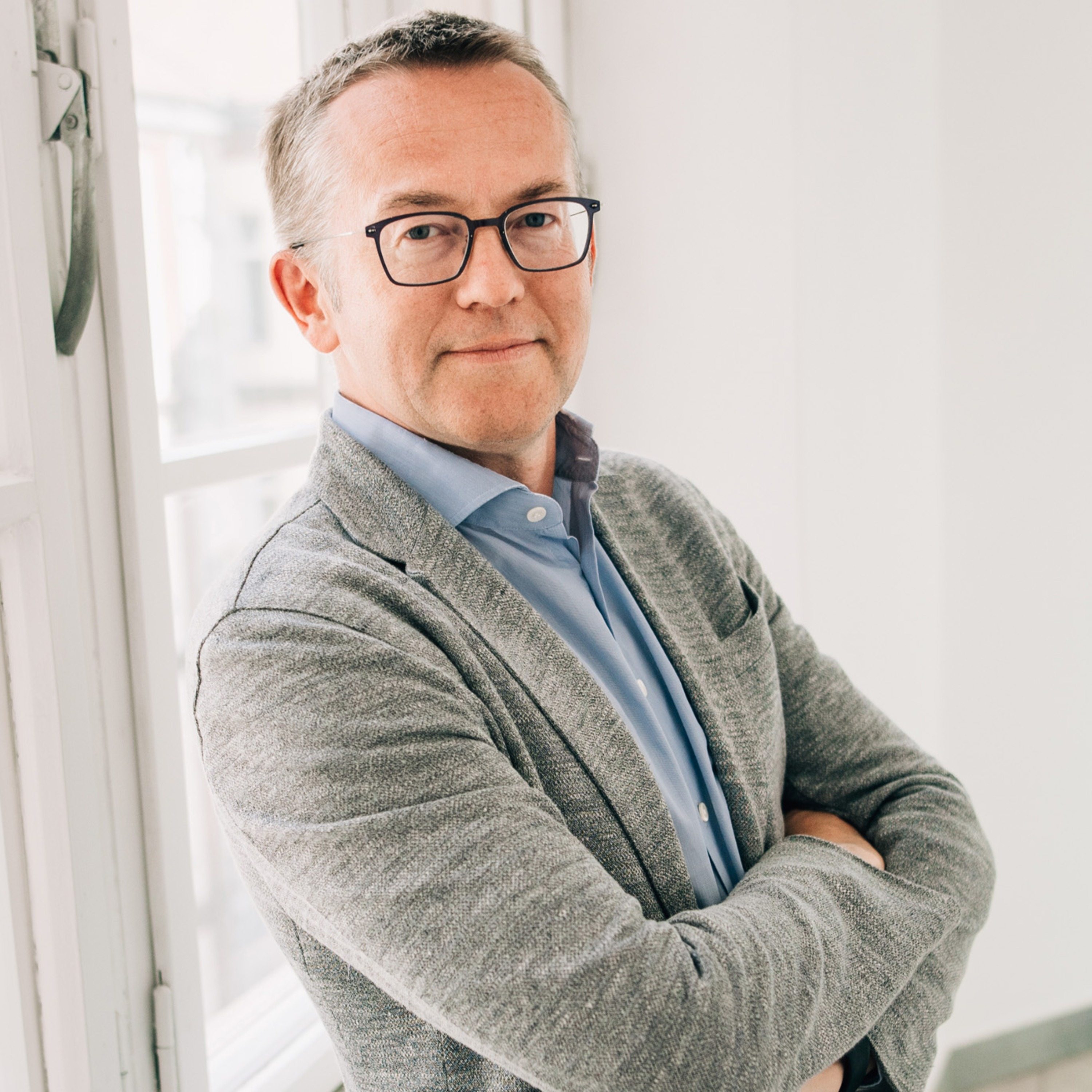
President, CEO Janus Worldwide
The translation industry was better prepared for this crisis than many other industries since remote working has been a long-standing practice for most LSPs. Nevertheless, we had to rework our business continuity plan and pay special attention to issues like cash flow and cost optimization. And because work for some of our teams around the world decreased, remained the same for others, and even grew for some, we had to monitor workloads closely and re-distribute resources and projects as demand changed.
We also took the time to develop new technology to streamline our production process. We launched a new release of our GTP platform for collaboration with clients and continued major AI-based development projects in our ERP system with Autopoilot for autonomous project management, a vendor suggestion process, intelligent LQAs, and remote simultaneous interpreting. In the long run, LSPs with client portfolios diversified across industries, regions, and client types are much better positioned to master this pandemic – and any future crisis or downturn.
2020 has been a difficult year for us all, at both the team and individual level. We have had to live with isolation, restrictions, health risks, economic upheavals, and challenges we have never faced before. Someone said at the beginning of the year: “Your plan for 2020 is already history.” Indeed, we had to adapt quickly to the changing situation, make sometimes tough decisions and ensure the smooth operation of our company in the most trying circumstances. During the 2nd quarter, the language services industry experienced an unprecedented recession – almost 20% on average, but some companies reported as much as 40–50%. The industry has experienced declining volumes, a payments crisis, psychological stress among employees, and uncertainty. We approved a business continuity plan where we identified major risks and action roadmaps to maintain continuity of our operation. By taking timely steps, strictly adhering to our strategy, and efficiently coordinating ongoing processes, we had already managed to reverse the adverse trends in the 3rd quarter and reach growth indicators. And in the 4th quarter, we consolidated the success achieved.
This year, Janus Worldwide is celebrating its 25th anniversary. This is a perfect time for us to reflect on the performance of the company as a whole, and set goals for the future, looking ahead to, among other things, further geographical expansion and an increasing shift toward more complex multilingual content creation services. 2020 brought a lot out to the open: it was a difficult year for us all, at a team level, and personally. We had to adapt quickly to the changing situation and approved a business continuity plan where we identified major risks and action roadmaps to maintain the smooth operation of our company in the most trying of circumstances. The industry is undergoing transformation. Companies seeking to expand cannot simply tread water but must evolve to meet the changing needs of their customers. To guide it in its own transformation, Janus developed a corporate strategy for 2020–2022. At its heart, the strategy is to expand our operations as a global supplier of language and related services. Digital transformation is particularly important to us, and we offer customers additional services. The company’s plans include transitioning from an LSP to a CSP, providing customers with a full range of content services. A key focus of our development strategy is technology, including but not limited to AI and MT. We are actively investing in our own in-house solutions. One of these is GTP 2.0.
2021 was a year to reconsider, realign, and reevaluate. The pandemic has affected business and trade worldwide, forcing business leaders to shift from their traditional approach and instead adapt to the unparalleled change brought on by the health crisis. The new challenges have tempered us, made us stronger, and even helped us to consolidate further.
Thanks to teamwork, flexibility, and commitment, Janus achieved steady growth in revenue and project value throughout the year. We took on new interesting and large-scale projects, establishing partnerships with new clients and expanding cooperation with our loyal customers. I’m delighted to note that, despite the restrictions and ongoing tensions in the world, Janus has continued along a path of sustainable development. We have great plans for 2022. In the coming year, our strategy will focus on expanding our core competencies, resources, and assets in the following areas: IT, technical sciences, life sciences, marketing and law, games, and multimedia. We also plan to focus on areas such as machine translation, the development of ERP/GTP2, and adding new services to our portfolio, among other things. It’s not enough to simply keep up the pace: we need to strive to be better than we were yesterday.
“Evolution, Not Revolution”: Our Motto for the New Reality
In my opinion there is no clear forecast for a return to normalcy in business or indeed in the world as a whole. We have to accept the new normal.
Talk of an impending recession, new waves of the pandemic and other macro- and microeconomic risks can artificially restrict businesses’ freedom to plan for the future, creating a sense of instability and enforced stagnation. I have seen and experienced more than one crisis in the translation industry, and so the words of Haruki Murakami spring to mind: “One thing is certain. When you come out of the storm, you won't be the same person who walked in. That’s what this storm’s all about.” Every crisis is about becoming stronger and adapting to the new reality.
As we learned during and after the pandemic, we have to “run” quicker and build a degree of flexibility into our business strategies. Our teams have adapted well to working from home, so as we devise our global extension plans, we can take a broader approach to business premises, incorporating office, co-working, or remote options. As a part of our digitalization strategy, we have invested in research and development projects to support the new work environment, launched a new edition of our GTP platform with extended functionality, and boosted our ERP with an advanced option.
We fully recognize the importance of every individual in our global team and have somehow come closer together, united by a mission to strengthen our position in the global market. We have opened new branches and won new customers. To be successful in this business, you have to think global and act local!
As forecasted, 2023 is going to be challenging for the language industry, affected by economic downturn and growing uncertainty. It is not the first time the global economy is facing a crisis, but it is the first time at this scale. The consequences and slowdown post crisis period will also last for quite some time, the logical business response to this situation is an appropriate strategy implementation, that will be adoptable during a slowdown in market growth.
At Janus we plan to pursue the option, that foresees diversification: either entering new vertical or/and geographical markets or adding new services. We have continued geographical expansion in 2022, opening production offices in Albania and Bulgaria, and even now a few more locations are under development and openings will be announced in the coming year.
What else to consider in corporate strategy during growing uncertainty and the approaching recession - risk management. As CEO I understand the importance of risk management for business sustainability.
Our risk management strategy focuses on five key areas:
- Maintaining and developing key customer relationships
- Retaining and motivating our staff
- Managing our supplier relationships
- Ensuring the stability of our cash flow
- Maintaining a robust IT infrastructure
These elements form the foundation of our business continuity plan (BCP), which ensures that we are prepared for any potential disruptions and can continue to operate effectively in the face of challenges.
At the end I want to say that anyone can steer the ship when the sea is calm, but real leadership is revealed in managing stormy seas!
The translation and localization industry is on the precipice of significant transformation, while the world is also changing at an accelerating pace. Enterprises are actively testing the implementation of Generative AI for various tasks, and machine translation (MT) and large language models (LLM) are becoming more and more widely used. The application of artificial intelligence has advantages, but also carries risks that should not be underestimated. Perfect tools do not exist – it is important to learn how to use these tools correctly.
All these interesting changes are happening in the context of the ongoing economic crisis and the related uncertainty. The average lifespan of a company used to be 62 years, but today it is only 15 years. Consequently, time-tested business strategies may no longer be effective. It is crucial to be flexible, respond to change, and develop the ability to anticipate trends. One must not be afraid of change and should be able to identify new opportunities in any transformation.
In this reality, we closely monitor the situation and test new directions and development hypotheses. Janus Worldwide is working not only on operational projects, but also on strategic projects to adapt to the upcoming changes. I'd like to emphasize that quality customer service will always be in demand, so we look to the future with confidence.
2023 has been challenging for our industry as the global economic downturn has impacted nearly every sector and country, and also had a negative impact on the linguistic sector. Many clients have reduced their spending on translation and some have implemented cost-cutting and restructuring programs. Another challenge for the industry has been the development of AI technologies.
Naturally, our company has also felt the effects of the crisis, but I consider our position to be stable. One of the reasons for this stability is our adherence to the development strategy that we implemented in the past and have followed in recent years. This strategy prioritizes global reach, a diversified client portfolio, the development of new services and technologies, customer focus, and the high professional level of expertise.
The current situation remains uncertain, and there are no clear signs of the market transitioning to growth. In 2024, our focus will be on the following objectives: developing our relationships with key customers, attracting new target clients, expanding our technological solutions, diversifying our service portfolio and enhancing operational efficiency.
I wish all my colleagues and industry peers a successful and productive year.
Konstantin Ioseliani, President and CEO of Janus Worldwide
Our industry has undergone major changes over the past year. Technology, and AI in particular, has had a major impact on the development of the translation market.
Fears that AI would replace the work of linguists entirely and leave most LSPs without any business were greatly exaggerated. As with MT, which came to the industry 25 years ago, the AI hype is fading. But AI is finding its place in the toolkits of leading LSPs and clients. We must not forget that human beings are at the center of every business, and the translation industry is no exception. While technology is important, the role of professional linguists in the industry has never been greater.
I am pleased that our company has found a successful combination of technological development and expansion of human resources potential. This is essential for future stability and is a guarantee of quality services for our clients.
Reflecting on 2024, it’s clear that this year has been a testament to resilience, growth, and unwavering commitment. Despite industry challenges—economic shifts, technological disruptions, and rising competition—our team has not only met these obstacles head-on but has excelled in achieving remarkable milestones.
This year, we’ve celebrated significant progress, including enhanced collaboration with strategic clients, the successful completion of complex multilingual projects, and expanded market presence in key regions. Our dedication to delivering exceptional service has solidified trust with clients and fueled our growth.
Looking ahead to 2025, the final year of our current three-year strategy, we remain steadfast in our commitment to:
- Strengthening our position as a global language service provider.
- Advancing our technological capabilities to stay at the forefront of innovation.
- Deepening relationships with our key accounts to deliver even greater value.
- Investing in the growth and development of our talented team—our most valuable asset.
Together, we will continue to navigate challenges, embrace opportunities, and achieve excellence. 2025 holds the promise of bold achievements and transformative success, building on the strong foundation we’ve laid.
2025 was the first year when everyone in the language services industry truly felt the cold breath of AI. This effect was further amplified by the current geopolitical landscape, in particular, the slowdown in international trade driven by tariffs and sanctions.
So what lies ahead for our industry in 2026, and what strategy should we follow? When thinking about this, I often recall a Chinese proverb: in unclear situations, it’s better not to rush. And this is exactly the kind of “unclear” situation the translation and localization market finds itself in today.
I’m genuinely surprised by companies that, within a few months, try to transform themselves from LSPs into AI integrators, product companies, or move into completely new areas without the necessary experience or expertise. Can one really become a successful expert in a new field that quickly? I don’t think so.
From my perspective, a more sustainable strategy is to stay within the domain where a company already has deep expertise and proven experience, while carefully exploring new technologies to optimize costs and improve quality. This is precisely the approach that will guide our work in 2026. We will continue to do what we do best and what our clients choose us for: delivering expert linguistic services powered by the latest technologies.
In a challenging period for the industry, I see our key responsibility as a gradual and systematic transformation of the business, supporting our people and partners, and preserving and developing long-term relationships with our key clients.