
Home > Featured-Content > For-LSPs > Industry-Data-and-Resources
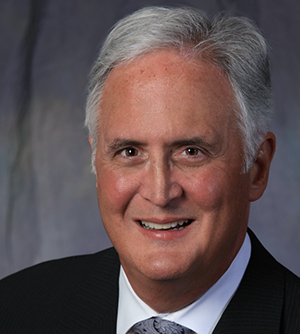
President, CEO LanguageLine Solutions
They say, “the same heat that melts butter hardens steel.” We feel like we’ve been tested and emerged stronger than ever.
The stakes of our work have never been higher than the past two months. We’ve had to rise to the occasion while working at a distance from one another.
This could have brought us to our knees. In our case, we are communicating better than we ever have, our bonds are stronger, and our value to our partners has never been clearer.
We’re returning to our offices with a new strength and resolve about the importance of what we do. Should there be a second wave of COVID-19 as some have predicted, we’re secure in knowing we’ve developed the muscles necessary to transition seamlessly.
For now, we look forward to being in the same room once again and capitalizing on this momentum.
This past year reinforced the importance of having a plan. Our 28,000 clients and their customers and patients depend on us during their greatest moments of need. We long ago put in place a pandemic plan that included preemptively moving the vast majority of our linguists into a work-at-home model. Of course, we never expected to have to use that plan, but we did not want a failure of imagination to be the thing that undermined our clients’ confidence in us. As a result, we had a process in place when COVID-19 struck and our service continued without any disruption. It would not be hyperbole to say that 2020 was our finest hour. We’ve developed muscles we never knew we had and have grown closer as a team. In fact, it gave us all immense pride that we were certified as a Great Place to Work as a result of an employee survey taken in the midst of the pandemic. COVID-19 has been like an x-ray of society. Its disproportionate impact on our most vulnerable populations has shone a bright light on centuries-long inequalities. Heading into 2021, we are more committed than ever to helping those who need it most in pursuit of a world in which language and cultural barriers no longer exist.
It is imperative to build organizations that are always finding ways to improve while remaining true to their missions. The pandemic has created a business environment with brand-new challenges. A business must be flexible by design, as opposed to adapting only when the sirens are blaring. We need to prepare for every eventuality and be pleasantly surprised when they don’t occur. One area where we must be diligent is hiring. Too many in our industry fail to realize today that the greater cost of hiring qualified linguists needs to eventually be reflected in higher selling prices to our valued clients. Rather than reinforcing an unsustainable pricing expectation, we should realize that we are responsible for the long-term health of the companies we lead. As for our mission, we wake up striving for a world in which language and cultural barriers no longer exist. This is a massive mandate to be sure, but it’s one every member of our team lives by. This is what provides the wind at our backs when we feel like we can’t go further. It drives us to adapt, be urgent, and be excellent.
All of us are yearning for something that looks like stability. Even those who have accepted they would never get their old lives back have hoped for a “new normal.” As leaders, it is time to come to terms with the world’s predictable unpredictability. Thanks to globalization and our growing interconnectedness, the pattern as we go forward will not be the familiar shape of the pre-COVID years, but the disruption and bewilderment of the pandemic era. The “Next Normal” is already here and if we can be assured of anything, it’s that its complexion will change repeatedly. “Leadership” and “adaptability” are now synonymous. Above the fog of the pandemic is a shining sun that can make the clouds part, but only if we seize the opportunities before us. One-size-fits-all management styles should be things of the past. In 2022, successful business leaders must address the disturbance from the past two years through human-centric strategies. Success lies in improving employee-employer relationships and embracing innovative management styles. This will impact our ability to retain and recruit top talent. The same individualized approach should be applied to client communication that addresses their unique needs. Businesses that take care of their people and partners will be those that succeed in future versions of the “Next Normal.”
Businesses have undergone a massive adaptation over the past two years. This has been vital, but one thing we know for sure is that it will not be enough.
The LSP of the future should not look like the one that existed two years ago. We should be poised to rethink how we work and even why we exist. A reimagining of the future starts with “why.”
Why are we here? What is our “soul” purpose? For LanguageLine Solutions, it’s to lead the way toward a world in which language and cultural barriers no longer exist.
Numerous studies have indicated that purpose-centered companies outpace those that aren’t. Those who say they embody that purpose at work are better employees. They are more likely to extend themselves for their customers and co-workers, and they are less likely to leave for greener pastures. Purpose helps businesses bond with customers, sense new opportunities, and compete at a higher level.
We are and will always be a talent-led business. We are constantly focusing on creating a better environment for our thousands of linguists by way of improvements to our technology and processes. Most importantly, we reinforce our “why” daily because it will be the human element that determines how quickly we arrive at our destination.
As diversity accelerates, America will become “majority minority” by 2045 and the second-largest Spanish-speaking nation 10 years after that. The demand for quality interpretation and translation in all languages will only grow – and grow quickly – in 2023 and beyond. The ability to scale – and scale quickly – will be the critical skill that defines language service providers. This might be difficult news for some LSPs, as scale and investment go hand in hand. Unpredictability is the new normal. A given LSP may be up and running most of the time. But what happens in the event of a widespread health crisis, cyberattack, cataclysmic weather event, or simply an emergency closer to home? This is when scale and multiple levels of redundancy are required, and those that have invested and planned will thrive. The pace at which our world is changing continues to accelerate. Only those who invest in securing their infrastructure, processes, and people will be best poised to succeed.
Generative AI holds thrilling potential for LSPs. Ethical challenges abound, but we are optimistic that these can be addressed through human-AI collaboration. AI is a technology tool, not a human, and has inherent flaws. And for all our flaws, we humans are emotionally intelligent, ethically discerning, and culturally aware – all attributes that are essential components of language access. Some of the challenges we contemplate daily include:
· Bias: Generative AI models are trained on vast amounts of data, and the quality and diversity of the training data plays a crucial role in their output. Human oversight can ensure that biases are not perpetuated or amplified.
· Privacy: LSPs handle large volumes of sensitive information. We must ensure that data protection and privacy standards are maintained rigorously.
· Accuracy: Human oversight and quality assurance processes should play a crucial role in ensuring that translations are accurate, culturally appropriate, and contextually relevant.
· Transparency: Being transparent about the use of Generative AI and its limitations is essential to maintain trust.
· Reskilling: Linguists are highly skilled individuals, prized for their judgement. LSPs should reskill and upskill their workforces, focusing on human-AI collaboration rather than complete automation.
Ideally, humans and technology will join forces in such a way that the sum is greater than the parts. The result can be a thoughtful, ethical, and high-quality approach to AI that lifts us to even greater heights.
Generative AI holds thrilling potential for LSPs. Ethical challenges abound, but we are optimistic that these can be addressed through human-AI collaboration.
AI is a technology tool, not a human, and has inherent flaws. And for all our flaws, we humans are emotionally intelligent, ethically discerning, and culturally aware – all attributes that are essential components of language access. Some of the challenges we contemplate daily include:
• Bias: Generative AI models are trained on vast amounts of data, and the quality and diversity of the training data plays a crucial role in their output. Human oversight can ensure that biases are not perpetuated or amplified.
• Privacy: LSPs handle large volumes of sensitive information. We must ensure that data protection and privacy standards are maintained rigorously.
• Accuracy: Human oversight and quality assurance processes should play a crucial role in ensuring that translations are accurate, culturally appropriate, and contextually relevant.
• Transparency: Being transparent about the use of Generative AI and its limitations is essential to maintain trust.
• Reskilling: Linguists are highly skilled individuals, prized for their judgement. LSPs should reskill and upskill their workforces, focusing on human-AI collaboration rather than complete automation.
Ideally, humans and technology will join forces in such a way that the sum is greater than the parts. The result can be a thoughtful, ethical, and high-quality approach to AI that lifts us to even greater heights.
Scott W. Klein, President and CEO at LanguageLine Solutions
Post-Localization coincides with the dawning of a new era: a truly globalized, multilingual economy. We see it as an incredible opportunity to help our clients dramatically expand their addressable market. Traditionally, translation and localization were approached as the final step in a content journey. This method often limited the potential reach and efficiency of global communication strategies.
With the advent of AI, we can make content multilingual from the outset. AI enables the seamless integration of multiple languages into content creation processes, ensuring that our clients' messages resonate globally from the beginning. This proactive approach revolutionizes how we think about content and its potential impact.
To achieve this:
- Language access must move upstream and become embedded within our clients’ content systems and strategies.
- Our role must evolve to be more consultative, earning a spot in strategic conversations.
- We must be well-versed in AI technology to guide clients effectively.
Humans remain as integral to this process as they have ever been. They are essential as experts in the loop, heavily involved in program design, implementation, quality control, and optimization.
By combining human expertise with AI capabilities, we can deliver unparalleled quality and reach, driving forward a truly global communication strategy.