
Home > Blogs & Events > Blogs

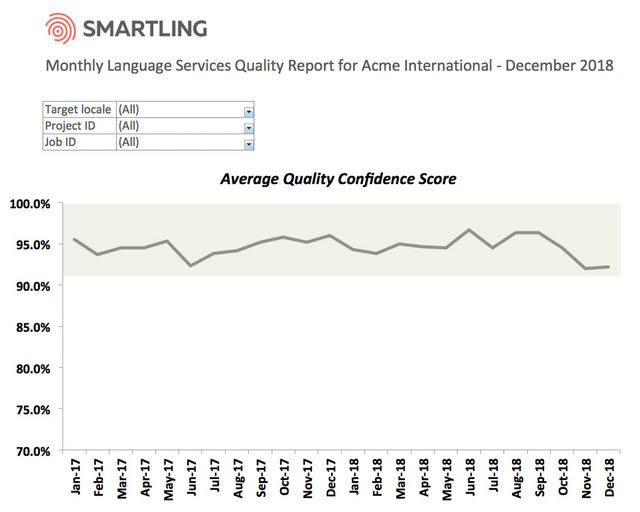
Buyers of language services crave the ability to measure translation quality in an objective way, get easy-to-digest reports on how it is tracking over time, and be able to drill down as needed for process improvement. However, quality control remains a mostly human-driven process – even when supported by QA technology – because humans have to sift through the reports these tools produce. What if there was another way to approach quality?
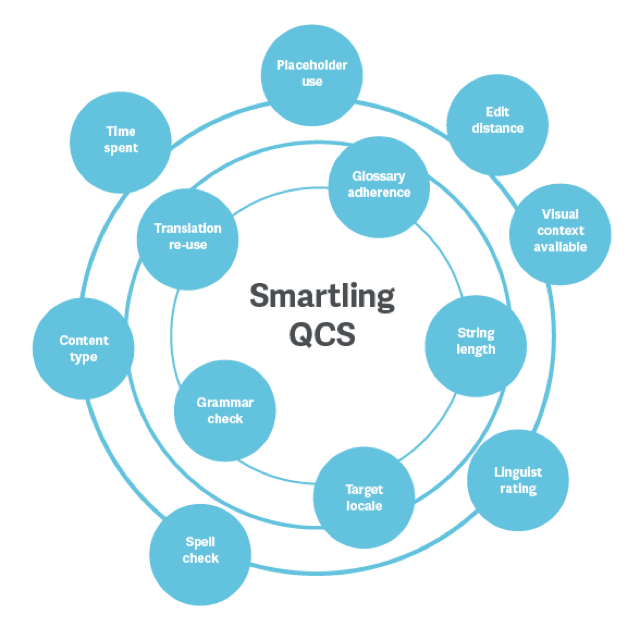
U.S.-based technology and service provider Smartling has come up with an innovative approach to translation based on a quality confidence score (QCS) that forecasts the chances that a human reviewer would consider a translation to be a quality one. This enables the company to present a radical approach to decision-making on projects.
Kunal Sarda, Vice President of Language Services at Smartling, reported that “We started the QCS 3.5 years ago as an exercise to automate the process of flagging content that wasn’t high enough quality to deliver to clients. Eventually, customers asked to make it available as an API. A year ago, we released it to clients to help guide process decisions on their content.” This data-driven approach to project decisions presents a major move forward for the language services industry, that extends beyond other efforts to aggregate data to manage quality.
Source: Smartling
Source: Smartling
Over time, Smartling intends to publish data-driven best practices regarding quality where it will contrast variables such as two-step vs. three-step translation processes, the presence vs. absence of visual context when translating, or the process for legal vs. medical texts. Clients expect LSPs to be data savvy, so all LSPs will eventually need to deliver such data.
CSA Research expects other tech-driven service providers to leverage project data in their efforts to educate clients on improving translation outcomes and safely reducing costs. Even those companies with less rich information in their systems should build similar models and improve them over time. Between translation management systems, translation memory solutions, and translation quality and in-context review tools, many buy-side and supply-side organizations have a wealth of data that could benefit from smart analytics that lead to actionable advice.
CSA Research contends that this development paves the way for the future on how LSPs and enterprises will be able to leverage big data to support decisions, enable stakeholders to validate and debunk theories on quality, and make necessary improvements accordingly. Just as with the use of artificial intelligence in project management and the shift to augmented translators, the smart use of data is becoming a crucial differentiator for tech- and business-minded providers. Eventually, companies that don’t exploit big data will be left behind.
Learn how Automated Quality Estimation and Automated Post-Editing redefine translation efficiency and accuracy.
Explore The Report
Access exclusive data, reports, and analyses that power smarter decisions across the global content industry.
Visit the platform

Our consulting team helps you apply CSA Research insights to your organization’s specific challenges, from growth strategy to operational excellence.
Contact our team