What Are the Language Needs for Healthcare Tourists and Their Providers
Alison Toon
March 12, 2026
Medical Tourism's Hidden Challenge - Communication
Communication, and therefore language, is essential when patients seek healthcare including orthopedic surgery in locations where they do not speak the local language. Dialog between the person seeking medical help, and the surgeons, doctors, anesthetists, nurses, physiotherapists, hotel staff, and others is a major part of achieving a satisfactory health outcome. In a world where lengthy medical waiting lists at home are pushing people to seek alternative solutions, this type of language support is becoming even more essential.
A Personal Experience with the Language Problem
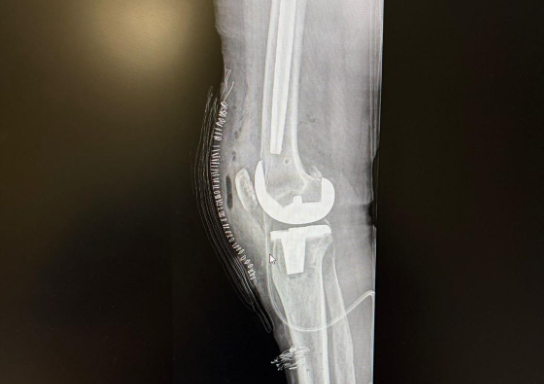
In late January this year, for various personal and medical reasons, not least being an existing, 40-year-old intramedullary femoral nail and a desire for not just surgery, but a full physical rehab program – I travelled to Valencia in Spain for a robotically assisted total knee replacement.
Spanish is not one of my languages: the few phrases of Spanish in my vocabulary come from the US and Mexico, not Europe. I was in the same situation as other medical tourists seeking surgical and physiotherapy treatment in Valencia and Denia; people from the UK, Ireland, the Netherlands, Poland, and other EU countries. We didn’t speak Spanish. Everyone finds ways to get by, but it is not easy.
Automated Interpreting Meets Reality
I was provided with a handheld, specialist language device at the hospital prior to my surgery. I thought this would be a good testing opportunity for automated interpreting, along with various apps on my smart phone. Guess what? It was a total fail. Not because of translation errors or technical issues – all the apps appeared to work. The problem was the fit with the situation.
Pre- and post-surgery days are stressful, often painful, and sometimes blurred by necessary drugs. The expensive device ended up abandoned and forgotten on the other side of the room, out of reach. Or I couldn’t remember which button to press for my speech versus the nurse’s. The delay in speech recognition, translation, and spoken interpretation was excruciating.
To be blunt: I used the interpreting device and apps mostly to laugh with the nurses, and to show what modern technology can do, but not as a practical communication tool. It was so much more effective to type a sentence into Google Translate and hand over the phone. Even easier was improvised signing or relying on a few shared words. My experience aligned entirely with many of those documented in “Perceptions on Automated Interpreting”.
Why Medical Tourism Matters to the Language Industry
More people now look beyond their home country for elective or even essential healthcare. While the headlines focus on cheap, botched vanity surgeries, a steady and reputable cross-border process exists. Patients travel for treatment through private payments, national healthcare programs, or insurance.
For example, the Cross Border Healthcare Directive allows citizens of EU countries to receive treatment in another EU country, if it’s a treatment available at home. I met Irish patients in Spain for hip and knee replacements whose surgery, hospital, and physiotherapy costs are reimbursed by the Health Service Executive (HSE), and Dutch citizens whose country’s healthcare insurance pays for intense physiotherapy rehab. Some had considered treatment much further afield before deciding on Spain. All faced the same challenge: communicating in a language not their own.
Where Language Support is Needed
Across the medical tourism journey, language support becomes necessary at several practical points:
·Explaining diagnoses, procedures, and surgical risks
·Obtaining informed patient consent
·Communicating symptoms, pain, or complications
·Understanding medication and recovery instructions
·Coordinating care across hospitals, physiotherapy providers, insurers, and travel coordinators
·And perhaps most importantly of all: day-to-day conversations between everyone involved.
Program managers such as TailorDoc and Healthcare Abroad help medical tourists by coordinating the different elements of care. They arrange surgery schedules and the initial stages of physical rehabilitation that set the path to recovery. They facilitate transport and sometimes arrange reimbursements for EU citizens. These organizations must be able to communicate and interpret across languages for everyone involved in the process. And as more patients and healthcare systems recognize that medical tourism is a safe option, both the demand and the language needs grow.
Opportunities for Language Services and Technology Providers
Is this an opportunity for LSPs, GCSPs, and language technology providers? Absolutely yes – but only if the solution fits the use case. In a healthcare environment, simplicity at the point of use is essential. Accuracy is non-negotiable. It cannot take five minutes to set things up before starting a conversation. It has to work immediately.
You cannot quickly call in a human interpreter to explain that you need the bathroom, that you have a migraine, or to ask what a middle-of-the-night medication is for. In some situations, a simple list of phrases in the source and target languages may be the most effective solution.
Language, Trust, and Patient Outcomes
Am I happy with the care I received in Spain? Absolutely. Do I wish my language experience had been better? Yes, of course – I would love to have had fluent conversations during my stay.
I am someone used to dealing with languages and traveling to unfamiliar places around the world. Imagine being in this situation if you speak only the language you were born into, in an environment that is stressful or even traumatic.
In medical tourism, language is not simply a convenience. Clear communication between patients and healthcare providers is essential to safe treatment, informed consent, and successful recovery.
Alison speaks English as a first language (both UK and USA variants), is fluent if a little rusty in French, understands Dutch better than she can speak it, and enjoys Polish grammar puzzles just for fun. She has published several fiction books,...
CSA Research materials are copyrighted and provided solely to authorized users.
You are prohibited from submitting any CSA Research content to
generative AI tools, machine-learning systems, public or shared platforms, or any service
capable of storing, training on, or redistributing the material. You may not copy, record,
share, translate, or upload any portion of this content beyond your licensed rights
Unauthorized use, disclosure, or distribution may violate applicable laws. For
permissions or to report misuse, contact legal@csa-research.com.
We use cookies and similar tracking technologies to analyze site traffic and understand how you interact
with our website. This includes using tools to capture behavioral metrics and heatmaps so we can improve our
site design. By clicking 'Accept', you consent to this tracking. You can learn more in our Privacy Policy.