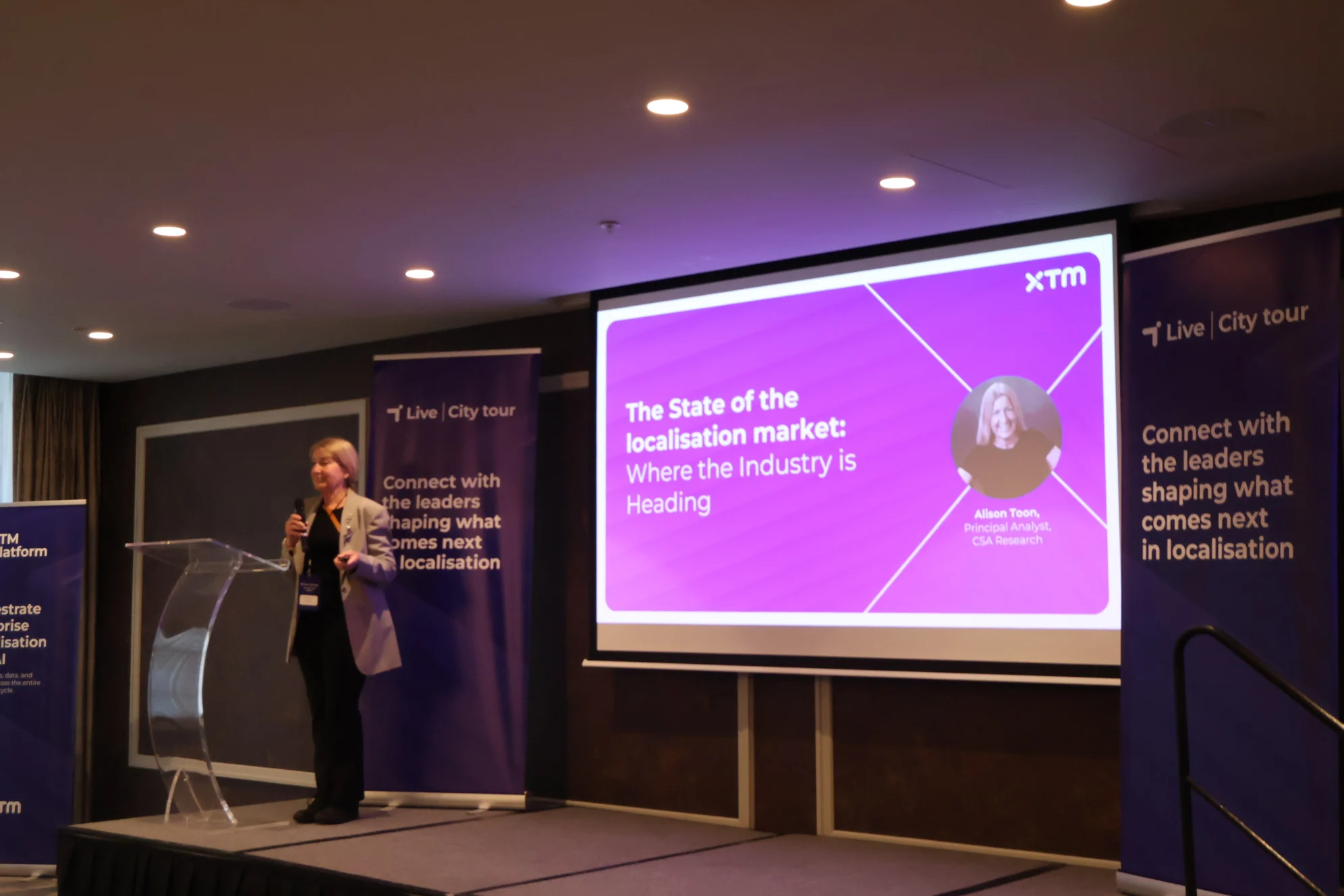
The week of June 8, I was in Dublin for two industry events: LocWorld55 where I presented “The Governance Gap in the Age of AI and Global Content” and XTM Live where I was invited to share a keynote, “The State of the Market: Where the Language Industry is Really Heading.“ Dublin is always worth the trip. Flying into Ireland reminds me why it is called the Emerald Isle. Compared to England, the landscape seems impossibly green. It’s clearly a place where things grow – including ideas.
In addition to presenting at both events, I had the opportunity to attend several social gatherings, including an evening hosted by Vistatec. As always, the conversations outside the conference rooms were just as valuable as those on stage. Across both events, participants shared ideas, concerns, successes, lessons learned, and predictions about what comes next for the language industry.
Unsurprisingly, artificial intelligence dominated nearly every discussion. Presentations focused on what AI can do today, how organizations are managing the associated risks, and what these changes mean for enterprise governance, language professionals, technology providers, and language services companies.
Several themes stood out.
AI has Moved from Experimental to Operational
A year or two ago, many organizations were running pilots and proof-of-concept projects. Today, enterprises and language technology providers are increasingly embedding AI into production workflows. The conversation has shifted from whether to use AI to how to govern it, scale it, and measure its impact.
People are Excited and Anxious at the Same Time
Some attendees see unprecedented opportunities to increase efficiency, expand multilingual reach, and create new services. Others worry about jobs, business models, and long-term viability. Many feel both emotions simultaneously.
There is also significant pressure to deliver results quickly. Enterprise teams face demands from executives who expect measurable outcomes. Suppliers face customer expectations, competitive pressures, and shrinking margins. Across the industry, organizations are trying to demonstrate value while adapting to rapid change.
Governance and Risk Management Remain Critical Gaps
Today, almost anyone in an enterprise or across the language supply chain can access a "magic button" that produces a translation. The output often appears fluent and professional, even when accuracy, appropriateness, or audience suitability may be questionable. For non-linguists, that fluency can create a false sense of confidence.
This challenge surfaced repeatedly in Dublin. Organizations understand the opportunities AI creates, but many still struggle to establish effective governance frameworks and risk management practices.
But There’s More…
My biggest takeaway from Dublin, however, came from something that was not always visible on stage.
Events such as LocWorld and vendor conferences naturally highlight the most advanced examples. We hear from large global enterprises that have successfully shifted significant volumes of low-risk content into AI-enabled workflows. We hear about organizations moving beyond traditional translation management system-centric approaches. At the same time, we hear about localization team restructurings and layoffs.
These stories are important, but they represent only part of the market. I heard that more than half of LocWorld55 attendees were first-time participants. That is encouraging and reflects continued interest in the industry. Yet countless international organizations still operate outside the ecosystem represented at these events.
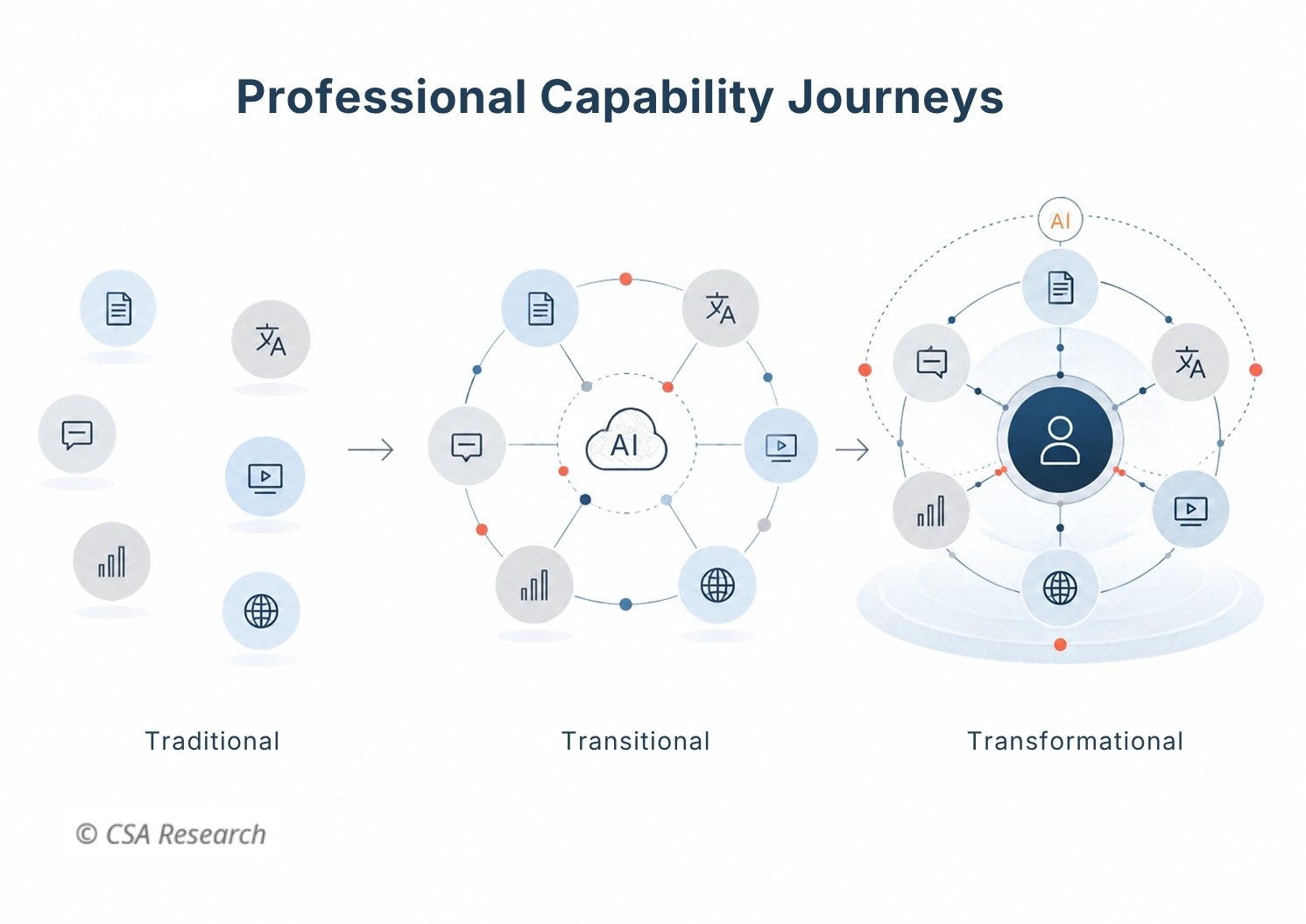
At CSA Research, we regularly work with companies whose localization and multilingual content processes might seem outdated to conference attendees. Many such organizations – including major brands – still rely heavily on email, spreadsheets, manual workflows, and highly customized processes. Yet these organizations support substantial multilingual communication needs and continue to operate successfully on a global scale. Importantly, many of these organizations have never invested heavily in translation management systems or other localization infrastructure. That creates a different kind of opportunity.
In some ways, the situation resembles what happened in telecommunications when regions without extensive landline networks adopted mobile technology directly. Rather than replacing mature infrastructure, organizations can leapfrog to newer approaches built around automation, AI, and language intelligence.
That opportunity should not be overlooked.
How to Find and Address New Opportunities
The amount of valuable content created every day that remains inaccessible to people who do not understand its language is enormous. Selective, controlled use of automation and AI can help organizations scale multilingual communication in ways that were previously impossible. At the same time, human expertise remains essential for governance, quality, risk management, cultural adaptation, and business-critical communication.
The localization industry is not disappearing. It is evolving through another period of transformation.
The challenge for both individuals and suppliers is identifying where opportunities exist, understanding the associated global content risks, building compelling business cases, and communicating value to executives, procurement teams, and hiring managers.
For professionals seeking new roles, the market remains active. Companies continue to hire, although navigating increasingly automated and over-subscribed recruitment processes presents its own challenges. For suppliers, the opportunity lies in helping organizations modernize responsibly and demonstrating measurable outcomes. CSA Research offers a variety of training courses and advisory sessions tailored to buyer expectations for new solutions offerings – and how to sell them.
I hope that over the next few years we will see more case studies from organizations that are only now beginning their transformation journeys. Their stories may ultimately prove just as important as those of the industry's largest and most mature localization programs.
Finally, I would like to thank Donna Parrish and Ulrich Henes for their many years of leadership, inspiration, friendship, and service to the localization community as they hand over the reins of LocWorld to its new owners. Donna and Ulrich’s impact on this industry is difficult to overstate, and I know many of us are grateful for everything they have contributed.